How to Choose Trekking Poles
Who this guide is for
For first-time and early trekkers in Bangladesh thinking about buying trekking poles.
If you are wondering whether to buy trekking poles for a trek in Bandarban, Sajek or Nepal, and which ones, this guide is for you. We talk here about walking poles for hiking. Ski poles and snowshoe poles are not covered.
Eight things to check when choosing poles
Eight criteria, each with a plain explanation.
1. Whether you need poles at all. The Appalachian Mountain Club (AMC) says two extra contact points with the ground add stability on rough terrain, river crossings, heavy loads and snowshoeing in deep powder. It says poles engage the upper body and reduce strain on the knees, especially going downhill, and cites a 1999 study in which poles on a 25-degree downhill grade decreased the compressive force on the knees by 12 to 25 percent. AMC also says poles add little on gentle or flat ground, snag in dense brush, and get in the way when you scramble with your hands. In those cases, strap them to your pack. (Source: AMC)
2. Material: aluminium or carbon. AMC says aluminium is durable, cheaper and can be straightened if bent, at about 18 to 22 oz per pair (about 510 to 620 g). Carbon is lighter, at about 12 to 18 oz per pair (about 340 to 510 g), and can crack irreparably under duress. GearLab says carbon is strong under vertical load but weak when bent sideways, and aluminium bends rather than snapping. Switchback Travel recommends aluminium for durability and for winter use. (Source: AMC, GearLab, Switchback Travel)
3. Lock type. AMC says the three common locks are twist, lever and push-button, and lever locks have largely replaced twist locks because they are more durable and reliable. Switchback Travel says twist locks can get stuck if overtightened and tend to loosen on the trail. GearLab says plastic levers save weight but are more prone to snapping, and aluminium levers are more durable. (Source: AMC, Switchback Travel, GearLab)
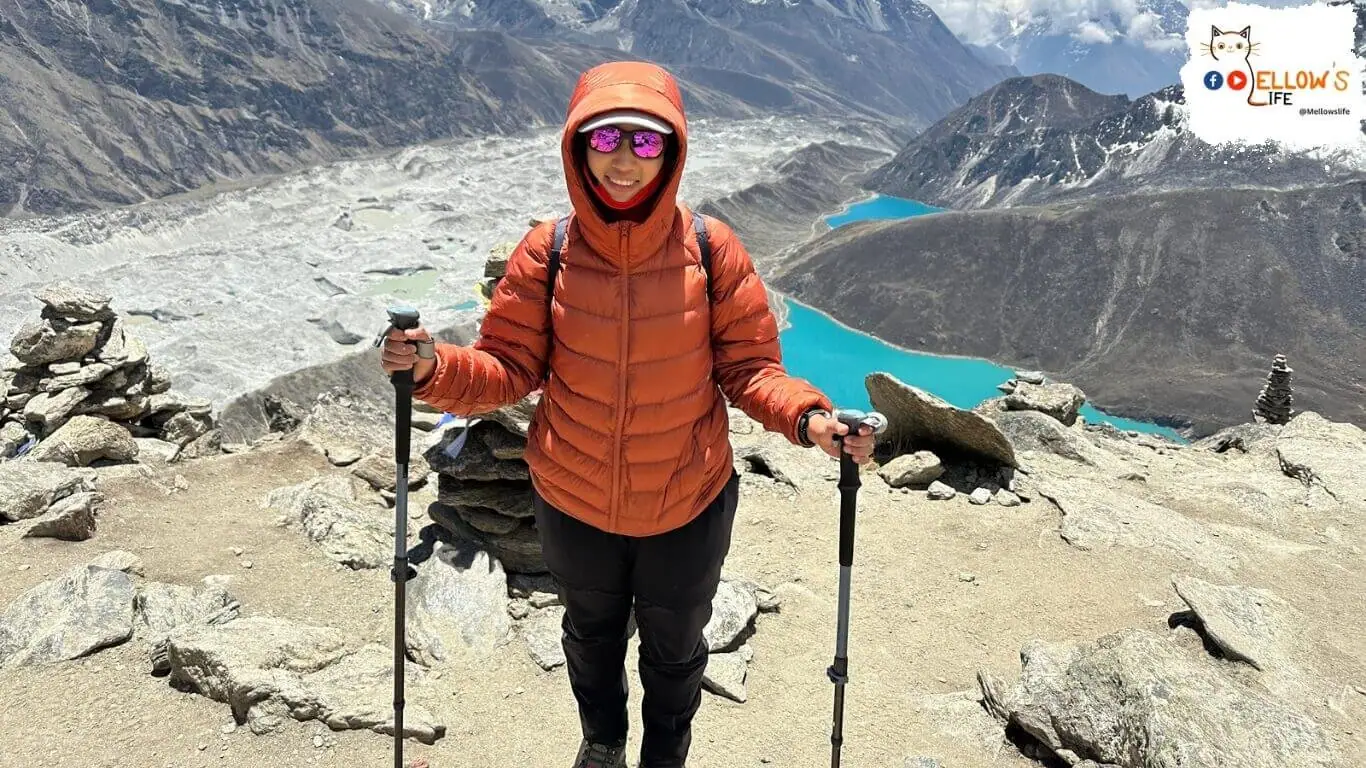
4. Length. For most adjustable poles, AMC says to set the length so your elbows form a 90-degree angle when you hold the poles straight up and down. Shorten them for steep climbs and lengthen them for descents. Fixed-length poles must be sized to your height. Switchback Travel gives the same elbow rule. (Source: AMC, Switchback Travel)
5. Grip material. AMC says cork is the most comfortable and the priciest, foam gives a secure grip and handles moisture and cold well, and hard plastic or rubber is the cheapest but can chafe and get slick with sweat. The sources differ on sweat: Switchback Travel says cork wicks sweat and foam absorbs it, while GearLab says cork absorbs sweat poorly. Grip is mostly a matter of comfort, so hold the pole if you can. (Source: AMC, Switchback Travel, GearLab)
6. Wrist straps. AMC says wrist straps help reduce hand fatigue and transfer weight to the upper body, and recommends lightly padded, adjustable straps for longer hikes. Switchback Travel says to slide your hand up through the bottom of the strap and press the strap into the grip with your palm, so you can lean on the pole without a death grip. (Source: AMC, Switchback Travel)
7. Packed length and pole type. AMC says most poles are 24 to 27 inches collapsed (about 61 to 69 cm), and some foldable models reach about 15 inches (about 38 cm). Switchback Travel says folding poles are lighter and collapse up to 10 inches shorter than telescoping poles, but they bear less weight and offer little adjustment. Check this against the space in your pack. (Source: AMC, Switchback Travel)
8. Tips, baskets and shock absorbers. Switchback Travel says to buy poles with a removable basket if you plan to use them in snow. GearLab says small baskets suit dry dirt, gravel and rocky trails, and large baskets suit snow. AMC calls spring-loaded shock absorbers more gimmick than function and not worth the extra money. Switchback Travel agrees for most hikers, and says they may suit people with injuries or weak joints. (Source: Switchback Travel, GearLab, AMC)
Think it through for your own trip
Questions to ask for your own route. We have no sourced advice for specific regions.
We have not found sources that let us give separate pole advice for the hills of Bangladesh or for Nepal. So we are not writing specific length or route rules here.
- How steep and long are the descents? Poles help most there (criterion 1).
- How heavy is your pack? GearLab says poles become more valuable as pack weight increases.
- Will you cross streams or walk through snow? Look at criteria 1 and 8.
- Will you need your hands free to scramble, take photos or check a map? Strap the poles to your pack (criterion 1).
- Are you flying? Packed length (criterion 7) matters. Check your airline’s current rules. We have not verified any figures on this.
Mistakes you might make
Common beginner mistakes.
- Setting the poles by guesswork. AMC and Switchback Travel both give the 90-degree elbow rule as the starting point.
- Not adjusting the length on slopes. AMC says to shorten for steep climbs and lengthen for descents.
- Gripping hard instead of using the strap. Switchback Travel says the strap gives a stable point at the wrist so you do not need a death grip.
- Paying for shock absorbers without a reason. AMC says they are not worth the extra money.
- Choosing carbon without thinking about toughness. GearLab says carbon is weak when bent sideways and can chip, crack or snap.
What to check before you buy
What to check before you buy.
- Decide whether you want poles at all, for your route (criterion 1).
- Pick aluminium for toughness or carbon for lightness (criterion 2).
- Pick lever locks and look at the lever material (criterion 3).
- Check that the pole reaches your 90-degree elbow height (criterion 4).
- Check the grip and the strap, and the packed length (criteria 5 to 7).
- Match the exact model against the manufacturer’s information.
- Read the seller’s return policy before you buy, so you can return poles that do not fit.
- Check the day’s price on Daraz. We do not write prices here.
Quick checklist
Short checklist.
- Decided poles are useful for the route
- Material chosen: aluminium or carbon
- Lever locks checked
- Length reaches a 90-degree elbow
- Grip and strap comfortable
- Packed length fits your bag
- Return policy read
Frequently asked questions (FAQ)
Four common questions.
1. Aluminium or carbon? AMC says aluminium is durable, cheaper and can be straightened, while carbon is lighter but can crack irreparably. Switchback Travel recommends aluminium for durability and winter use.
2. How long should the poles be? AMC and Switchback Travel say to set them so your elbows form a 90-degree angle and lengthen them for descents. For steep climbs, AMC says to shorten the poles, while Switchback Travel suggests choking up (gripping lower) on them.
3. Lever lock or twist lock? AMC says lever locks have largely replaced twist locks because they are more durable and reliable.
4. Do I need shock absorption? AMC says it is more gimmick than function. Switchback Travel agrees for most hikers, and says it may suit people with injuries or weak joints.
Weather and trail conditions change. Before you go trekking, check the current weather and trail conditions (check current conditions).
Caution: A listing title alone cannot confirm the brand, the model, or how the gear will perform. Match the exact model and specifications against the manufacturer’s information. Check who the seller is and whether the product can be returned. If the details do not match, or you cannot verify a claim that matters for safety, do not buy from that listing.
Sources (opened 2026-11-27)
- Appalachian Mountain Club, How to Choose the Best Trekking Poles for You (no date shown on page): https://www.outdoors.org/resources/amc-outdoors/outdoor-resources/how-to-choose-the-best-trekking-poles-for-you/ (stability, knee study, when poles are less useful, materials and weights, grips, straps, locks, length, packed length, shock absorbers)
- Switchback Travel, How to Choose Trekking Poles (last updated September 29, 2026): https://www.switchbacktravel.com/hiking/trekking-pole-buyers-guide (elbow rule, strap technique, locks, materials, grips, folding vs telescoping, baskets, shock absorbers)
- OutdoorGearLab, How to Choose the Right Trekking Poles (July 9, 2024): https://www.outdoorgearlab.com/topics/camping-and-hiking/best-trekking-poles/buying-advice (heavy packs, carbon vs aluminium, lever locks, grips, baskets)
- Unit conversions: 18 oz = 510 g; 22 oz = 620 g; 12 oz = 340 g; 24 in = 61 cm; 27 in = 69 cm; 15 in = 38 cm (rounded)
- REI Expert Advice was not used: its pages could not be opened by our research tool, so no claim here is attributed to REI.
If you spot a mistake, tell us at hello@mellowslife.com. We correct it on the page itself and add the date.
Related: Gear notes; guides How to Choose a Trekking Backpack and Gear checklist.