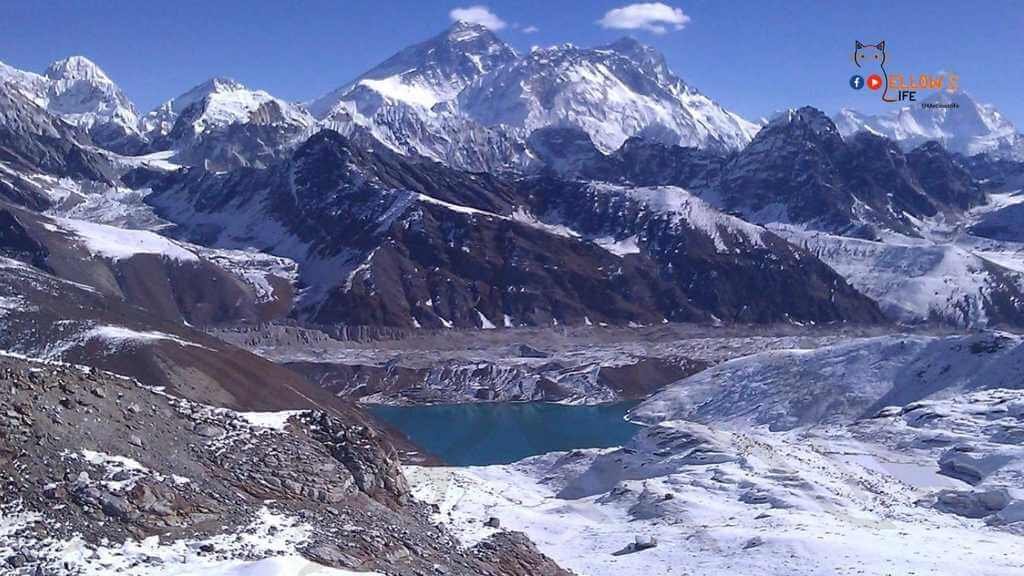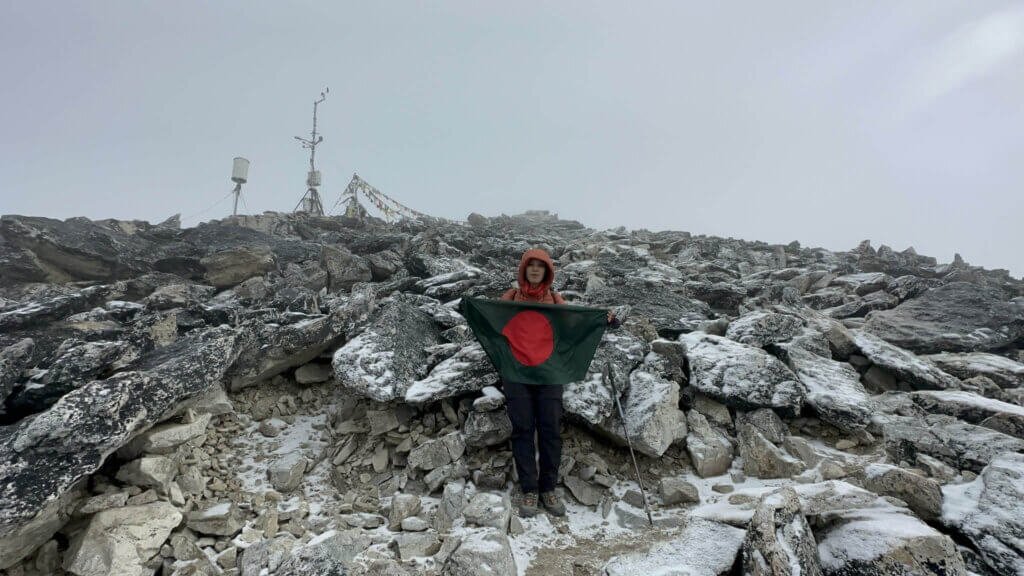
Standing at the foot of the world’s highest mountain is a dream that pulls thousands of trekkers to Nepal every year, and I still remember how unreal it felt when we finally reached Everest Base Camp ourselves. If you are a first-timer wondering whether you can do it too, let me reassure you: with the right preparation, you absolutely can.
In this complete guide, I’ll walk you through everything you need to know about the Everest Base Camp (EBC) trek, from how hard it really is and when to go, to permits, costs, and the little lessons we learned the hard way. Consider this your friendly starting point before the adventure of a lifetime.
How Hard Is the Everest Base Camp Trek, Really?
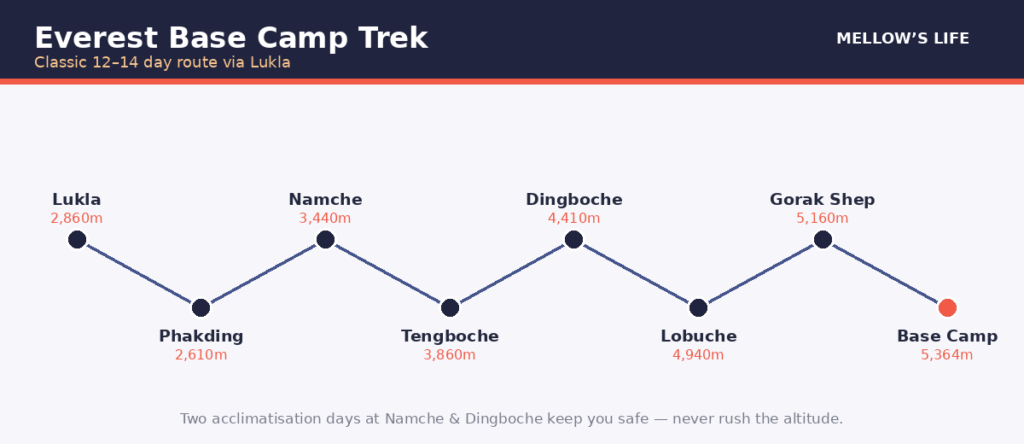
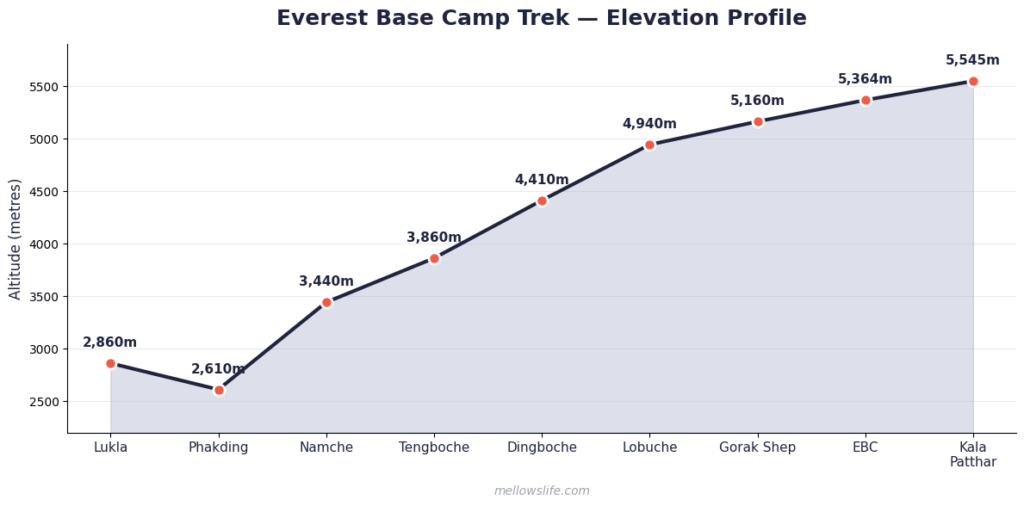
Let me be honest: the EBC trek is challenging, but it is not a technical climb. You don’t need ropes, ice axes, or mountaineering experience. What you do need is patience, decent fitness, and the willingness to walk five to seven hours a day for almost two weeks. The real challenge isn’t the distance, it’s the altitude. The trek tops out at 5,364 metres at Base Camp, and a little higher if you climb Kala Patthar for the classic Everest sunrise view.
When Is the Best Time to Trek to EBC?
The two golden windows are spring (March to May) and autumn (late September to November). Skies are clearest, the trails are lively, and the mountain views are at their best. We have also trekked in the quieter off-season, and while you’ll have the trails almost to yourself, you trade that solitude for colder nights and a higher chance of snow. For your first time, stick to spring or autumn.
How Many Days Does It Take?
Most classic EBC itineraries run 12 to 14 days round trip from Lukla, including two crucial acclimatisation days in Namche Bazaar and Dingboche. Please don’t rush this. Those rest days aren’t lazy days, they are what keep altitude sickness away and get you to Base Camp safely. If you have extra time, the longer route via the Gokyo Lakes and Cho La Pass is one of the most beautiful detours on earth.
Permits, Costs, and Getting There
To trek the Khumbu region you’ll need two permits: the Sagarmatha National Park entry permit and the local Khumbu Pasang Lhamu Rural Municipality permit. Most trekkers begin by flying from Kathmandu to the tiny mountain airstrip at Lukla. Costs vary widely depending on whether you go solo, hire a guide, or join a group, but planning for guides, teahouse lodging, food, and permits well in advance will save you a lot of stress later.
Acclimatisation: The Golden Rule
If you remember one thing from this guide, make it this: climb high, sleep low. Gain altitude gradually, drink plenty of water, and never ignore the early signs of altitude sickness such as headaches, nausea, or dizziness. There is no prize for rushing. The mountains will still be there tomorrow, and slow and steady is exactly how you reach Base Camp with a smile on your face.
A Few Honest Tips Before You Go
Train your legs before you arrive, especially for the long downhill days that punish your knees. Pack proper layers, because the temperature swings dramatically between sunny afternoons and freezing nights. Carry some cash, as ATMs disappear past Namche. And most importantly, look up from the trail often. It’s easy to get lost in your own footsteps and forget you are walking through the most spectacular mountain scenery on the planet.
The Everest Base Camp trek changed the way we see the world, and it can do the same for you. Take it one step at a time, prepare well, and trust that your body and mind are more capable than you think. We’ll see you on the trail.
Read More
10 Expert Trekking Tips That Beginner Trekkers Must Know
Conquer the Mountain! 5 Early Warning Signs of Mountain Sickness
The Ultimate Everest Base Camp Packing List for Every Season