You don’t need to be an athlete to reach Everest Base Camp, but you do need to be ready for long days on your feet at high altitude. The fitter you are, the more you’ll actually enjoy the trail instead of just surviving it. The good news is that with a few months of smart, consistent training, almost anyone in reasonable health can prepare their body for this adventure.
Here is the beginner-friendly training plan we wish we’d had before our first big trek, built around the things that truly matter on the trail.
Start Early: Give Yourself Enough Time
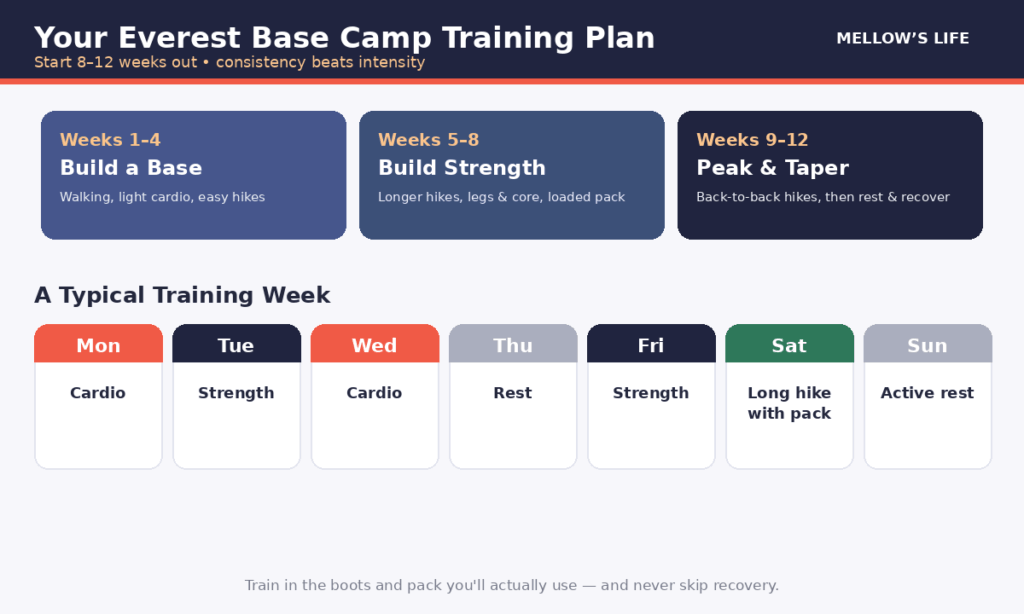
Ideally, begin training at least 8 to 12 weeks before your trek. This gives your body time to build stamina gradually and adapt without injury. If you are starting from scratch, the earlier the better. Consistency beats intensity every time, so three or four focused sessions a week will take you a long way.
Build Your Engine: Cardio Is King
The EBC trek is all about endurance, so cardio should be the backbone of your training. Brisk walking, jogging, cycling, swimming, and stair climbing all build the aerobic fitness you’ll rely on. Aim to raise your heart rate for 30 to 45 minutes several times a week, and gradually increase the duration as you grow stronger.
Train Like You Trek: Hike With a Loaded Pack
Nothing prepares you for trekking like trekking itself. Get out on real trails as often as you can, wearing the boots and backpack you’ll actually use. Start with short hikes and slowly add distance, elevation, and pack weight. These training hikes also break in your gear and reveal any blisters or niggles long before they matter on the mountain.
Strong Legs, Happy Knees: Strength Training
Long ascents, and especially long descents, put serious strain on your legs and knees. Build strength with squats, lunges, step-ups, and calf raises, and don’t neglect your core, which keeps you balanced on uneven ground. Strong legs won’t just get you up to Base Camp; they’ll protect you on the long walk back down.
Don’t Forget Your Lungs and Mind
Altitude is the great equaliser on this trek, and while you can’t fully train for thin air at sea level, strong cardio fitness helps your body cope. Just as important is your mindset. There will be hard days, cold nights, and moments of doubt, so practise patience and resilience. A calm, determined attitude is one of the most underrated pieces of trekking gear there is.
Rest, Recover, and Listen to Your Body
Training hard is only half the story; recovery is where your fitness actually grows. Build rest days into your week, sleep well, eat nourishing food, and never push through sharp pain. Arriving at the trailhead fit and uninjured is far better than arriving exhausted from overtraining. Treat your body as your most important piece of equipment.
You’re More Capable Than You Think
Preparing for Everest Base Camp is a journey in itself, and every walk, every workout, and every flight of stairs brings you one step closer to that unforgettable view. Stay consistent, be patient with yourself, and trust the process. When you finally stand at Base Camp with the Khumbu glacier at your feet, you’ll know every drop of effort was worth it.
Read More
Everest Base Camp Trek: The Complete Guide for First-Time Trekkers
The Ultimate Everest Base Camp Packing List for Every Season